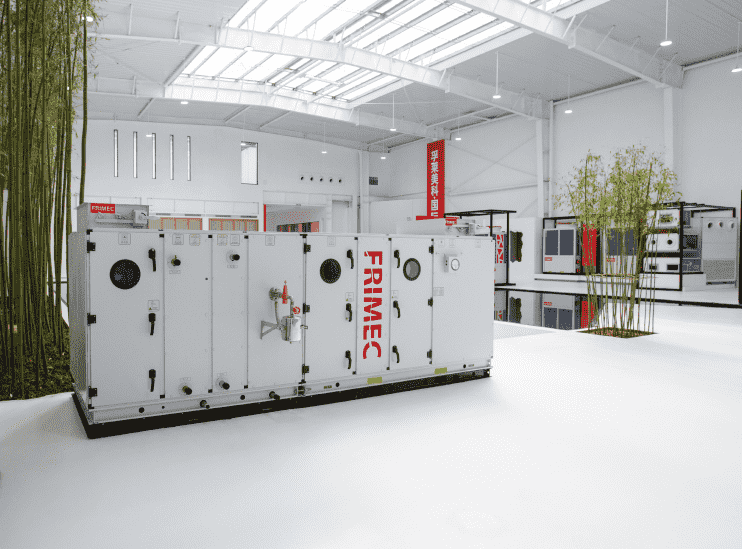




Due to the unique characteristics of HVAC systems in tall and large spaces, stratification can be implemented based on actual usage requirements. Depending on various air supply methods, flexible options such as remote jet, overhead swirl, underfloor air distribution, and side-wall air supply can be employed.
The primary air supply methods in tall and large spaces are overhead air distribution and stratified air supply. Where overhead air distribution is used, the cooling load should be calculated based on the entire room’s air conditioning needs. In contrast, with stratified air supply, the heat gain in non-air-conditioned areas can be removed through exhaust, and only the heat gain entering the air-conditioned areas needs to be calculated. Swirl diffusers or jet nozzles are the primary types of air outlets suitable for air supply systems in large spaces, characterized by high air volume, low noise levels, and controllable airspeeds. They are particularly applicable in vast structures such as gymnasiums and factory buildings.
Modern HVAC systems for tall and large spaces commonly incorporate intelligent control technologies, such as APP-based smart connectivity and unit cloud platforms, enabling remote control via mobile devices. Furthermore, using decentralized low-capacity machines in place of centralized systems can reduce temperature gradients, enhance operational flexibility, and lower running costs.